Machame or Marangu? Choose Marangu if you want to sleep in huts on a steady, direct trail. Lekobe’s 7-day Marangu trek starts from US$2,340 per person. Choose Machame if you want more scenery and a better climb-high, sleep-low profile and don’t mind camping. The 8-day Machame trek starts from US$2,690. Both routes finish at Uhuru Peak (5,895 m).
Last updated: 23 October 2026. Prices checked against the live trip pages on lekobeadventures.com.
At 5,895 m (19,341 ft), Kilimanjaro is Africa’s highest mountain. Most first-time climbers end up choosing between the “Coca-Cola” route (Marangu) and the “Whiskey” route (Machame). This guide compares where you sleep, how steep each day is, how acclimatization works and what each climb costs with Lekobe Adventures and Safaris.
Machame vs Marangu at a glance
Figures come from Lekobe’s itineraries. Prices are per adult starting prices; final quotes depend on group size, dates and hotels.
| Marangu (7 days) | Machame (8 days) | |
|---|---|---|
| Lekobe price | From US$2,340 per adult | From US$2,690 per adult |
| Nickname | Coca-Cola route | Whiskey route |
| Sleeping on the mountain | Dormitory-style huts | Tents at bush camps |
| Nights on the mountain | 5 | 6 |
| Start gate | Marangu Gate (1,860 m) | Machame Gate (1,800 m) |
| Highest camp | Kibo Hut (4,700 m) | Barafu Camp (4,673 m) |
| Summit approach | Gilman’s Point to Uhuru Peak | Stella Point to Uhuru Peak |
| Descent | Same trail as ascent | Different trail (Mweka) |
| Acclimatization | Full rest day at Horombo | Climb high to Lava Tower, sleep low at Barranco |
| Gradient | Gradual and direct | Steeper, including the Barranco Wall |
| Best for | Comfort, hut sleeping, first-time trekkers | Scenery, hikers with some experience |
What the Marangu route is really like
Marangu is the oldest established route on Kilimanjaro. It is also the only one with sleeping huts. According to Tanzania National Parks (TANAPA), climbers stay in alpine huts at Mandara, Horombo and Kibo, while every other route uses tented camps. That appeals to anyone who has never camped.
Day by day on Lekobe’s 7-day Marangu trek
- Day 1: Airport pickup, transfer to your hotel in Arusha or Moshi and a full trek briefing and gear check.
- Day 2: Marangu Gate (1,860 m) to Mandara Hut (2,700 m), 8 km through montane forest, about 3–4 hours.
- Day 3: Mandara to Horombo Hut (3,700 m), 12 km across heath and moorland with views of Mawenzi and Kibo.
- Day 4: Acclimatization day at Horombo, with an optional hike towards Mawenzi Hut (4,600 m).
- Day 5: Horombo to Kibo Hut (4,700 m), 10 km across the alpine desert of the Saddle.
- Day 6: Summit night via Gilman’s Point to Uhuru Peak (5,895 m), then a long descent to Horombo.
- Day 7: Descent to the gate, summit certificate and transfer to your hotel or airport.
Who Marangu suits
Marangu’s gradual gradient and direct trail have earned it a reputation as the easiest route. Lekobe’s own trip page is honest about this: summit night is still physically demanding. You go up and down the same trail, so the scenery repeats. In return you get huts, a trip one day shorter than Machame and a built-in rest day at Horombo.
What the Machame route is really like
Machame is the scenic, more adventurous option. Lekobe describes it as physically demanding and best suited to climbers with some prior hiking or high-altitude experience. You camp every night in tents set up by your crew. The route crosses the Shira Plateau, passes Lava Tower and climbs the Barranco Wall. It then descends a different trail, the Mweka route, so you see new landscapes every day.
Day by day on Lekobe’s 8-day Machame trek
- Day 1: Arrival, hotel transfer and pre-trek briefing in Arusha or Moshi.
- Day 2: Machame Gate (1,800 m) to Machame Camp (2,835 m), about 11 km through rainforest. Expect muddy, slippery trails.
- Day 3: Steep climb to Shira Camp (3,750 m) on the Shira Plateau, where nights drop well below freezing.
- Day 4: Up to Lava Tower (4,630 m) for lunch, then down to Barranco Camp (3,900 m). This is a key acclimatization day.
- Day 5: The Barranco Wall scramble, then on to Karanga Camp (3,995 m).
- Day 6: Karanga to Barafu Camp (4,673 m) for an early dinner and rest.
- Day 7: Midnight start via Stella Point to Uhuru Peak (5,895 m) around sunrise, then down to Mweka Camp (3,100 m).
- Day 8: Descent to Mweka Gate (1,640 m), certificates and transfer back to Arusha.
Who Machame suits
Choose Machame if you are reasonably fit, comfortable with a few long, steep days and happy to camp. Going up to Lava Tower and back down to sleep at Barranco is the climb-high, sleep-low pattern guides mean by good acclimatization.
Which route is easier: Marangu or Machame?
It depends on what you mean by “easy”. On a normal trekking day, Marangu is easier: the gradient is gentler, the path is direct and you sleep in a hut. Machame has steeper sections, including the Barranco Wall. Its days in the forest and on the plateau can be long and muddy.
Altitude, however, is what stops most people from reaching the top, and fitness matters less than you might think. TANAPA says climbs take five to eight days depending on the route. It also says “the more days, the higher the possibility to conquer the summit”. Both Lekobe itineraries are built around this idea. Marangu adds a full rest day at Horombo. Machame gives you an extra day on the mountain plus the Lava Tower climb-high, sleep-low day.
Summit night compared
- Marangu: You start from Kibo Hut (4,700 m) around midnight. It’s about 6 km up to the summit via Gilman’s Point, then 15 km down to Horombo. That’s 6–8 hours up and 5–6 hours down.
- Machame: You start from Barafu Camp (4,673 m) at midnight, reach Stella Point and Uhuru Peak around sunrise and descend to Mweka Camp. That’s about 18 km in total, with 7–8 hours up and 4–6 hours down.
Both summit nights are cold, windy and tough. Whichever route you choose, pack proper cold-weather layers.
Huts vs camping: comfort on the mountain
Where you sleep is often the deciding factor. On Marangu you share dormitory-style huts with basic shared facilities, and camping is not allowed. On Machame your crew carries and pitches the tents, and Lekobe provides the tents, sleeping gear and mess equipment. Neither route has showers, so Lekobe’s trip notes recommend bringing plenty of wet wipes.
Things that are the same on both routes
- Every climb must be guided by a licensed operator; TANAPA does not permit solo trekking.
- Mountain meals, a hotel before and after the climb, and a crew of guide, cook and porters.
- Travel insurance covering high altitude (up to 6,000 m) is strongly recommended, and on Machame it is listed as an exclusion you must arrange yourself.
Cost: what’s included on each trek
The 7-day Marangu trek starts from US$2,340 per adult and the 8-day Machame trek from US$2,690 per adult. Park fees are set by the authorities. TANAPA says they depend on visitor category, route and number of days, which is one reason quotes vary.
Included
- Marangu: airport transfers, private transport to and from the mountain, hotel and hut accommodation, national park fees, licensed guide, cook and porters, all mountain meals, a certificate of achievement, basic first aid, a mobile phone with crisis response access and free storage for non-mountain luggage.
- Machame: 2 hotel nights in Moshi or Arusha before and after the climb, airport and park transfers, park permits, camping and rescue fees and VAT, a professional mountain crew, tents and sleeping gear and all mountain meals.
Not included
- International flights and personal gear on both routes. On Machame, gear is available to rent.
- Tips for your crew. See our guide to tipping in Tanzania for how tipping works here.
- On Machame: lunch and dinner at the hotel, hotel drinks and travel insurance.
Combining Kilimanjaro with a safari or Zanzibar
Many travellers from the US, UK and Europe add a safari or beach break after the climb. TANAPA notes that most climbers arrive via Kilimanjaro International Airport (JRO) or Arusha Airport (ARK). Both are also gateways to the northern safari parks.
- Rest day near the mountain: the Materuni Waterfalls, coffee tour and Kikuletwa hot springs day trip (from US$200) is a relaxed way to spend a day before or after the trek.
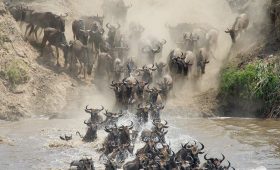
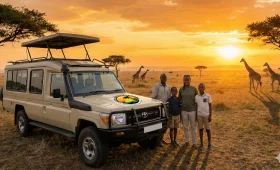
- Safari after the summit: the 2-Day Serengeti and Ngorongoro Crater Safari from Arusha starts from US$1,188 and needs very little walking. See our Serengeti National Park page.
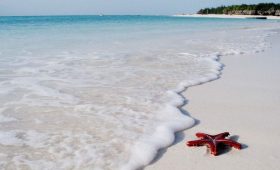
- Beach recovery: finish on the white sand of Zanzibar Island with the 5-Day Zanzibar Beach Holiday Adventure, from US$1,210.
For more ideas on pairing parks with the coast, read Tanzania Safari and Zanzibar: 7, 10 and 12-Day Itineraries. For safari budgets, see Safari from Zanzibar Cost. Visa and entry rules are covered in Tanzania Travel Requirements, and seasons in Best Time to Visit Tanzania.
Our verdict: Machame or Marangu?
- Pick Marangu if you want to sleep in huts, prefer a steadier gradient, have one less day to spare or simply don’t want to camp.
- Pick Machame if you have some hiking experience, want the most varied scenery and a different descent trail, and value the climb-high, sleep-low acclimatization profile.
Not sure? Tell us your fitness, experience and dates and we’ll recommend a route. Learn more about the mountain on our Mount Kilimanjaro destination page.
Frequently asked questions
Is Machame harder than Marangu?
On most trekking days, yes. Machame has steeper climbs, muddy forest trails, the Barranco Wall and nights in a tent. Marangu has a gentler, more direct path and huts. Summit night is demanding on both. Machame’s extra day and climb-high, sleep-low profile help with acclimatization, which matters more than raw fitness at 5,895 m.
Which Kilimanjaro route is best for beginners?
Beginners who have never camped often feel more comfortable on Marangu because of its huts and steady gradient. Lekobe’s 7-day version includes an acclimatization day at Horombo. Fit beginners with some hiking experience can also do well on Machame. Lekobe recommends it mainly for climbers with prior hiking or high-altitude experience.
How many days do you need to climb Kilimanjaro?
TANAPA states that climbing to Kibo takes five to eight days depending on the route, and that more days increase your chances of reaching the summit. Lekobe’s Marangu trek is 7 days in total, including a hotel night and a rest day. The Machame trek is 8 days, including hotel arrival and the descent day.
Do you sleep in huts on the Machame route?
No. Huts are only found on the Marangu route, at Mandara, Horombo and Kibo, according to TANAPA. On Machame you sleep in tents at designated camps: Machame, Shira, Barranco, Karanga, Barafu and Mweka. Lekobe supplies the tents, sleeping gear and mess equipment, and your crew sets up camp before you arrive.
How much does it cost to climb Kilimanjaro with Lekobe?
Lekobe’s 7-day Marangu trek starts from US$2,340 per adult and the 8-day Machame trek from US$2,690 per adult. Both prices include park fees, crew, mountain meals and transfers. Flights, tips and personal gear are extra. Your final quote depends on group size, dates and hotel choice.
Can I climb Kilimanjaro without a guide?
No. Tanzania National Parks states that every climb must be guided by a licensed operator and that solo trekking is not permitted. Climbers must also stay on marked routes, follow camp rules and respect ranger and guide instructions. Lekobe’s treks include a licensed guide, a cook and porters on both routes.
Get your Kilimanjaro quote
Ready to choose your route? Message our team on WhatsApp (+255 676 68 1293) or email info@lekobeadventures.com. You can also use the enquiry form on the 7-Day Marangu trek or 8-Day Machame trek page. We usually reply within 24 hours with a tailored quote for your dates and group size.