The Great Migration follows the rain in a loop that lasts all year. From December to April the herds calve on the southern plains around Ndutu. Between May and July they move west and north. From about July to October they reach the northern Serengeti. In November they head south again. Lekobe fly-in migration safaris from Zanzibar start from US$2,068.
Last updated: 14 October 2026. Prices checked against the live trip pages on lekobeadventures.com.
The wildebeest migration is the main reason many travellers from the USA, the UK and Europe book a Tanzania safari. It is also the hardest part to time. The herds have no timetable. They follow fresh grass and water, so the same week can look very different from one year to the next. This month-by-month guide shows where the herds usually are, what you can expect to see, and which Lekobe safaris from Zanzibar fit each season.
What is the Great Migration?
Tanzania National Parks (TANAPA) describes the migration as more than 1.5 million wildebeest, along with hundreds of thousands of zebras, about half a million gazelles and some eland. They move in a yearly pattern in search of fresh grazing and water (TANAPA Serengeti brochure).
The herds move around the wider Serengeti-Mara ecosystem. TANAPA puts its size at about 30,000 square kilometres. It takes in Serengeti National Park, part of the Ngorongoro Conservation Area, several game reserves (Maswa, Grumeti, Ikorongo and Kijereshi) and the Maasai Mara National Reserve in Kenya. For most of the year, the migration is in Tanzania.
Why the timing changes every year
The rain decides where the herds go. An early or late rainy season can move the herds weeks ahead of or behind the “typical” calendar. Treat the months below as a guide, not a promise. A good guide will track where the herds are each day and plan your game drives around that.
Great Migration calendar at a glance
| Months | Where the herds usually are | What to expect |
|---|---|---|
| December to March | Southern Serengeti and Ndutu Plains (Ngorongoro Conservation Area) | Big herds on the short-grass plains; calving season peaks around January and February |
| April to May | Southern and central Serengeti | The herds start moving north; long rains, green scenery, fewer vehicles |
| June to early July | Western Serengeti and the Grumeti River area | Large columns of wildebeest; possible Grumeti River crossings |
| July to October | Northern Serengeti (Kogatende and the Mara River area) | Mara River crossing season; dry-season game viewing |
| November | Northern and central Serengeti, heading south | Short rains begin and the herds walk back towards the southern plains |
TANAPA’s own Serengeti National Park page lists June to October (the dry season) as the best time for the migration and January to February for calving season.
December to March: calving season in the south
When the short rains arrive, the herds gather on the open plains of the southern Serengeti. They spread into the Ndutu Plains, which the Ngorongoro Conservation Area Authority describes as a calving ground for migratory animals, on the edge of the southern Serengeti plains. NCAA says December to April is the best time to see the migration around Ndutu, and that thousands of calves are born there during calving season.
Why go in calving season
- Huge herds on flat, open grassland, which makes them easy to watch
- Newborn wildebeest and zebra foals, often within days of birth
- Lions, cheetahs and hyenas follow the herds, so you can see a lot of predator activity
- It fits well with a Zanzibar beach holiday after Christmas or in February
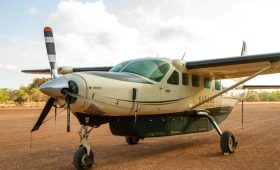
The 3-Day Serengeti & Ngorongoro Fly-in from Zanzibar (from US$2,068) suits this season well. On Day 2 there is a morning game drive in the southern Serengeti before you drive to the Ngorongoro highlands. On Day 3 you go down into the crater, then fly back to Zanzibar.
April and May: the long rains and the move north
Once the southern grass is grazed down, the herds start moving north-west through the central Serengeti. This is the green season. Some days bring heavy showers, but the landscape is fresh and there are far fewer vehicles than in peak months. Many animals in the Serengeti do not migrate, so game viewing can still be rewarding while the main herds are on the move.
Our guide to the best time to visit Tanzania explains what the rainy months mean for roads, lodges and beach weather on Zanzibar.
June and July: the western corridor and the Grumeti River
As the dry season starts, the herds usually push through the western Serengeti, where the Grumeti River crosses their route. TANAPA names the Grumeti River and the Seronera Valley among the areas that matter most to the ecosystem (TANAPA Serengeti wildlife). Crossings here are less predictable than the famous Mara crossings, but the long lines of wildebeest moving across the plains are a sight in themselves.
From late June the weather is dry and cooler, the vegetation thins out, and animals gather near water. That makes game viewing easier across the whole northern circuit, including the Ngorongoro Crater and Tarangire.
A good mid-year option
The 4-Day Tarangire, Serengeti & Ngorongoro from Zanzibar (from US$2,025) has an 08:00 flight from Zanzibar to Arusha. You spend a day in Tarangire, two days in the Serengeti and a morning in the Ngorongoro Crater before flying back to Zanzibar.
July to October: Mara River crossings in the northern Serengeti
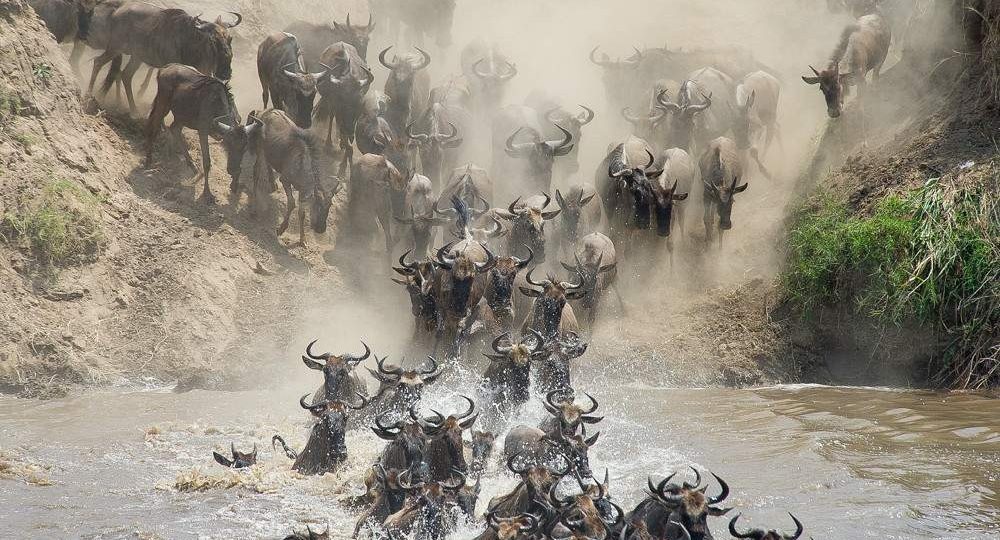
This is the part of the migration most people picture: thousands of wildebeest gathering on a steep riverbank, then plunging into the Mara River where crocodiles wait. In the dry season the herds reach the far north of the Serengeti, around Kogatende, and cross the river back and forth as they search for grazing. Some groups cross into Kenya’s Maasai Mara before turning back south.
What to know before you book
- Crossings are never guaranteed. Herds can wait on the bank for hours and then walk away. More nights in the north means more chances.
- Flying in saves a lot of time. The northern Serengeti is a long way by road. Our fly-in trips land at Kogatende Airstrip in late morning.
- This is peak season. Camps in the north fill early, so enquire as soon as your dates are fixed.
Northern Serengeti migration safaris from Zanzibar
On the 4-Day Mid-Range Great Migration Northern Serengeti (from US$2,090), your hotel pickup is at 05:00 for an 08:00 flight from Zanzibar. You may transit in Arusha before landing at Kogatende at around 11:30. You spend two days in the north and central Serengeti, then go down into the Ngorongoro Crater on Day 4 and fly back to Zanzibar in the afternoon. The 4-Day Luxury Fly-in Migration to Serengeti & Ngorongoro (from US$2,420) follows the same route, with Malaika camps in the Serengeti and Lion’s Paw Camp on the Ngorongoro Crater rim.
November: the herds return south
When the short rains return, the herds leave the north and head back through the central Serengeti towards the southern plains, where the cycle starts again. November is a quieter month. Moving herds can turn up in different parts of the park, so a flexible itinerary in the central Serengeti is often the best choice. It is also a good month to combine a safari with an uncrowded week on Zanzibar Island.
Migration safaris from Zanzibar: price comparison
| Safari | Best migration season | Route | Starting price (USD) |
|---|---|---|---|
| 4-Day Tarangire, Serengeti & Ngorongoro | June to October (dry season) | Fly to Arusha, then drive | from $2,025 |
| 3-Day Serengeti & Ngorongoro Fly-in | December to March (south) | Fly to Serengeti, drive to Ngorongoro | from $2,068 |
| 3-Day Mid-Range Fly-in Safari | December to March (south) | Fly to Serengeti, drive to Ngorongoro | from $2,090 |
| 4-Day Mid-Range Great Migration North | July to October (Mara River) | Fly to Kogatende, drive south | from $2,090 |
| 4-Day Luxury Fly-in Migration | July to October (Mara River) | Fly to Kogatende, drive south | from $2,420 |
All five trips include non-resident park fees, a professional driver-guide, all flights during the tour, accommodation and the meals listed in the itinerary. International flights, drinks, travel insurance, visa fees and tips are not included. Our tipping guideline is US$10 per person per day; see how much to tip a safari guide in Tanzania. Prices shown are starting prices. Your final quote depends on group size, travel dates and the accommodation you choose. For a full breakdown, read our guide to safari from Zanzibar cost.
How to choose the right month for you
- You want river crossings: plan for the northern Serengeti between July and October, and stay at least two nights in the north.
- You want baby animals and predators: go between December and March and base yourself in the southern Serengeti or near Ndutu.
- You want fewer vehicles and lower demand: look at April, May or November and keep your route flexible.
- You want a beach holiday too: any season works. See our Tanzania safari and Zanzibar itineraries for 7, 10 and 12-day ideas.
Frequently asked questions
What is the best month to see the Great Migration?
It depends on what you want to see. For Mara River crossings, aim for July to October in the northern Serengeti. For calving and predator action, February is a strong choice in the southern Serengeti. TANAPA lists June to October as the best time for the migration and January to February for calving.
When are the Mara River crossings?
Mara River crossings usually happen between about July and October, when the herds are in the northern Serengeti near Kogatende. The exact timing depends on rainfall, and no single day is guaranteed. Spending at least two nights in the north gives you a much better chance of seeing a crossing.
When is calving season in the Serengeti?
Calving happens on the southern Serengeti plains and the Ndutu area of the Ngorongoro Conservation Area. TANAPA gives January to February as calving season. NCAA says December to April is the best time to see the migration around Ndutu, where thousands of calves are born each year.
Can I see the Great Migration on a safari from Zanzibar?
Yes. Lekobe fly-in safaris leave Zanzibar on an 08:00 flight and reach the Serengeti the same morning, so you need no overland travel from the coast. Three- and four-day migration safaris from Zanzibar start from US$2,068 and include park fees, flights during the tour, accommodation and listed meals.
Is the Great Migration in Tanzania or Kenya?
Both, but the herds spend most of the year in Tanzania. The Serengeti-Mara ecosystem covers around 30,000 square kilometres, including Serengeti National Park, part of the Ngorongoro Conservation Area and Kenya’s Maasai Mara. Herds usually reach Kenya only for part of the dry season, around the Mara River.
Is it worth going during the rainy season?
Often, yes. The April and May long rains bring green scenery, quieter roads and fewer vehicles at sightings, and many animals in the Serengeti live there all year, not just during the migration. Expect some muddy tracks and wet days, and ask us which camps are open during those months.
Plan your Great Migration safari with Lekobe
Tell us your travel month, group size and budget, and we will suggest the part of the Serengeti that gives you the best chance of seeing the herds. Get a free quote on WhatsApp (+255 676 68 1293), email info@lekobeadventures.com, or use the enquiry form on any trip page, such as the 4-Day Great Migration Northern Serengeti safari.