Nyerere National Park, in southeastern Tanzania, is the country’s largest national park and one of the biggest protected wildlife areas in Africa. Formerly known as Selous Game Reserve, it’s built around the Rufiji River and known for boat safaris, walking safaris, and one of the largest wild dog populations left on the continent. It sees far fewer visitors than the northern parks, which means quieter game drives and a genuinely remote safari feel. Most travellers fly in from Dar es Salaam, and the best game viewing runs from June through October.
Key Facts Table
| Factor | Details |
|---|---|
| Location | Southeastern Tanzania, spanning the Morogoro, Lindi, and Mtwara regions |
| Size | 30,893 km² (11,928 sq mi) — Tanzania’s largest national park |
| Established | 2019, when the northern photographic third of the old Selous Game Reserve was gazetted as a national park |
| UNESCO status | Declared a UNESCO World Heritage Site in 1982 |
| Main river | The Rufiji River, which runs for roughly 600 kilometres through the park before reaching the Indian Ocean |
| Signature wildlife | Elephants, lions, leopards, hippos, and over 440 recorded bird species; one of the largest African wild dog populations in the world |
| Best time to visit | July to October, for the greatest overall concentrations of game |
| Nearest airport | Julius Nyerere International Airport, Dar es Salaam |
| Flight time from Dar es Salaam | Around 45 minutes to one of the park’s airstrips |
| Drive time from Dar es Salaam | About 5 hours to Mtemere Gate |
| Typical daily cost | $300 to $700 per person per day, depending on season and accommodation |
What Is Nyerere National Park?
Nyerere National Park sits in southeastern Tanzania and takes its name from Julius Kambarage Nyerere, the country’s first president. It was established in 2019 to commemorate him, carved out of what had been Selous Game Reserve, Africa’s oldest and largest game reserve. Most lodges, maps, and long-time safari guides still refer to the area as “Selous” out of habit, so don’t be surprised if the two names show up interchangeably in trip planning.
The scale here is hard to picture until you’re on the ground. At roughly the size of Switzerland, Nyerere is about twice the size of the Serengeti, and it’s the second-largest national park in Africa, behind only Namibia’s Namib-Naukluft. That size shapes the whole experience. You’ll rarely see another vehicle on a game drive, the habitat shifts noticeably from one section of the park to another, and where your lodge sits matters far more than it would in a compact park like Ngorongoro.
The park’s defining feature is the Rufiji River, which cuts through dense Miombo woodland, open grassland, and riverine forest, creating a mix of habitats that supports both resident and migratory wildlife.
Wildlife in Nyerere
Nyerere’s remoteness has kept it one of the least disturbed ecosystems on the continent, and the wildlife numbers reflect that. The park is home to elephants, lions, leopards, hippos, and more than 440 recorded bird species, alongside buffalo and a healthy population of Nile crocodiles along the river.
The species most associated with Nyerere is the African wild dog. The park and its wider ecosystem shelter around a third of the world’s wild dog population, making it one of the best places on the continent to see this endangered predator. Sightings aren’t guaranteed on any given day, but the odds here are better than almost anywhere else in Africa. Nyererenationalpark
If you’re chasing sheer elephant numbers, Nyerere holds its own but isn’t the national leader — Tarangire National Park in northern Tanzania has the country’s largest elephant population, so keep that in mind if elephants specifically are your priority.
Safari Activities
What sets Nyerere apart from most Tanzanian parks isn’t just the wildlife, it’s the range of ways you can experience it.
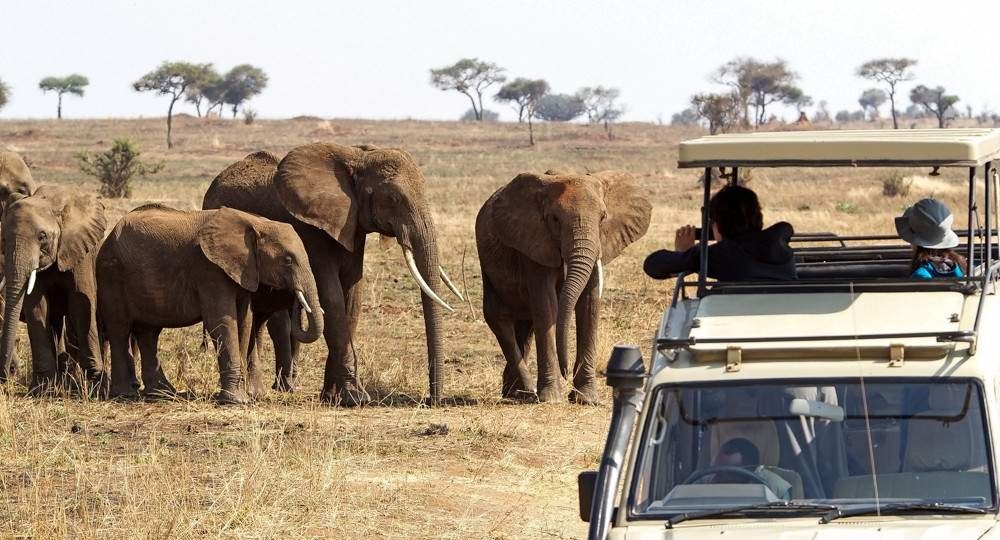
Game drives. Morning drives typically start around 6:00 am to catch the park’s early risers, with a second session in the afternoon. Expect sightings of the Big Five alongside antelope, kudu, hyena, zebra, and wild dog.
Boat safaris. A boat safari along the Rufiji River lets you get close to hippos, crocodiles, and waterbirds from a completely different vantage point than a vehicle offers. This is one of only a handful of parks in Tanzania where a river safari is a real option, and most visitors rank it among the highlights of the trip.
Walking safaris. Guided walks give you the chance to experience the wilderness on foot, typically alongside an armed ranger for safety. Guides tend to slow the pace right down on these outings, pointing out tracks, smaller creatures, and plant life that you’d miss entirely from a vehicle.
Fly camping and cultural visits. Some lodges offer overnight fly-camping deeper in the bush, and a number of operators also arrange visits with nearby communities for a look at local traditions and daily life outside the park.
Best Time to Visit
Nyerere runs on a fairly classic dry-season pattern. Game viewing improves progressively as the dry season goes on, with fewer mosquitoes and lower humidity, though the later months can get dusty. July through October delivers the highest overall concentrations of game, as animals cluster around the river and remaining water sources.
That said, don’t write off the rest of the year entirely. Wildlife viewing stays strong in various parts of the park throughout the year, and the wet season brings lush scenery, migratory birds, and noticeably lower rates at most camps. If budget matters more than peak-season crowds — which, in a park this size, were never much of an issue anyway — the shoulder months are worth considering.
Getting There
Almost every visitor starts at Julius Nyerere International Airport in Dar es Salaam, and from there you have two real options.
By air. This is the route most people take. Domestic flights run from Dar es Salaam to one of the park’s airstrips — Mtemere or Matambwe among the main ones — operated by carriers including Coastal Aviation and Auric Air, and the flight itself takes roughly an hour. A one-way ticket typically runs $250–$350 per person, with round-trip fares around $500–$700. Flights are also available from Arusha and Zanzibar, which is convenient if you’re combining Nyerere with the northern circuit or a beach stay.
By road. The drive from Dar es Salaam to Mtemere Gate covers about 230 km and takes roughly 5 hours, though road conditions turn rough for the final stretch, with the last 75 km running on bumpy gravel. It’s a longer, dustier day than flying, but it costs a fraction as much and gives you a look at rural southern Tanzania along the way.
By rail. For a genuinely different approach, the TAZARA railway runs from Dar es Salaam toward Fuga or Kisaki stations, the closest stops to the park, with the journey taking around 6–8 hours to Kisaki. It’s the cheapest option by far and a scenic one, though schedules aren’t always reliable, so build in extra time if you go this route.
Where to Stay
Because Nyerere is so large, accommodation is scattered across several distinct zones rather than clustered around one entrance, and where you base yourself shapes what your trip looks like. Camps along the Rufiji River focus heavily on boat safaris and hippo and crocodile viewing, while lodges in the Beho Beho Hills area, further north, lean into walking safaris and drier woodland scenery. Most properties here are tented camps rather than large hotels, ranging from simple and rustic to genuinely high-end, and nearly all of them build game drives, boat trips, and walks into the daily rhythm rather than treating them as optional extras.
Cost of a Nyerere Safari
Safari costs in Nyerere typically range from $300 to $700 per person per day, depending on the season and the level of accommodation. That’s a wide range, and it comes down to a few factors: whether you fly or drive in, whether you’re on a private or shared safari vehicle, and which part of the park your camp sits in.
Flying adds a real but predictable cost — budget roughly $500–$700 per person for a round-trip flight from Dar es Salaam — while the road transfer is far cheaper if you’re willing to spend most of a day getting there. Because the park has so few visitors relative to its size, even mid-range camps tend to deliver a genuinely private, uncrowded safari experience, which is part of why Nyerere routinely gets recommended to travellers doing a second or third trip to Tanzania.
Pros and Cons
Pros: far fewer vehicles per sighting than the northern parks; one of the best places in Africa to see African wild dog; boat safaris on the Rufiji River, an activity most Tanzanian parks don’t offer; relatively close to Dar es Salaam compared to the northern circuit; genuine wilderness feel given the park’s scale.
Cons: getting there costs more if you fly, and takes longer if you drive; game density in the wet season is lower and less predictable than in peak dry months; lodge choice matters more here than in smaller parks, since the wrong location can mean missing out on activities you wanted.
Expert Tips
- If a wild dog sighting matters to you, ask your operator which part of the park has had recent activity — packs move across large territories, and guides usually know current denning areas.
- Combine a boat safari with a game drive on the same day where possible. The two activities show you a different side of the same ecosystem and rarely overlap in what you’ll see.
- Book your camp based on activity, not just price. A lodge near the river is built around boat trips; one further inland leans toward walking safaris and woodland game drives.
- If you’re combining Nyerere with the northern circuit, flying between the two saves a full day compared to driving, and there are direct connections through Arusha.
- Travelling in the shoulder months (May–June or November) can mean noticeably lower rates without sacrificing much in terms of wildlife viewing.
Common Mistakes
Treating Nyerere like a quick add-on to a northern circuit trip. Given the size of the park and the travel time involved, a one-night stopover barely scratches the surface. Two to three nights is a more realistic minimum.
Assuming it’s cheaper than the northern parks because it’s less famous. Costs are broadly comparable to a mid-range northern circuit safari once flights and park fees are factored in.
Skipping the boat safari. It’s one of the park’s genuine differentiators, and travellers who only do game drives often say afterward that they wish they’d built in more time on the river.
Not checking road conditions before choosing a self-drive or budget road transfer. The final stretch into the park can be rough, and it’s worth confirming current conditions with your operator before committing to that route.
Frequently Asked Questions
Where is Nyerere National Park?
It’s in southeastern Tanzania, spanning the Morogoro, Lindi, and Mtwara regions, roughly 230 km southwest of Dar es Salaam.
Is Nyerere the same as Selous Game Reserve?
Yes, in practice. Nyerere National Park was created in 2019 from the northern, photographic third of the former Selous Game Reserve, and many lodges and maps still use the older name.
How big is Nyerere National Park?
It covers 30,893 km², making it Tanzania’s largest national park and Africa’s second-largest.
What animals can I see in Nyerere?
Elephants, lions, leopards, hippos, buffalo, and over 440 bird species, along with one of the world’s largest populations of African wild dog.
When is the best time to visit Nyerere?
July to October offers the strongest overall game concentrations, though wildlife viewing is good in other months too, especially for birdlife during the wet season.
How do I get to Nyerere National Park?
Most visitors fly from Dar es Salaam, a trip of around an hour, though a road transfer taking roughly <cite name=”42-1″>5 hours</cite> is a cheaper alternative.
How much does a Nyerere safari cost?
Typically $300–$700 per person per day, depending on season and accommodation level.
How many days should I spend in Nyerere?
Two to three nights is a reasonable minimum, given the park’s size and the travel time to reach it.
Can I do a boat safari in Nyerere?
Yes. Boat safaris along the Rufiji River are one of the park’s signature activities, offering close-up views of hippos and crocodiles.
Is walking safari available in Nyerere?
Yes, guided walking safaris are offered, usually with an armed ranger for safety.
Is Nyerere good for seeing wild dogs?
Yes — it’s considered one of the best places in Africa for this, since the wider ecosystem is thought to hold around a third of the world’s wild dog population. Nyererenationalpark
Is Nyerere less crowded than the northern parks?
Yes. Its size and remote location mean noticeably fewer vehicles per sighting than parks like the Serengeti or Ngorongoro.
Can I combine Nyerere with a northern Tanzania safari?
Yes, and it’s a common pairing — flights connect Nyerere with Arusha, the gateway to the northern circuit, as well as with Zanzibar.
Does Nyerere have the Big Five?
Yes, though rhino sightings are rare. Lion, leopard, elephant, and buffalo are all regularly seen.
Is Nyerere safe to visit?
Yes, it’s a well-established safari destination with experienced guides and operators, though as with any wilderness area, following your guide’s instructions matters.
What’s the weather like in Nyerere?
Hot and humid for most of the year, with a distinct dry season roughly June through October and rains typically falling between November and May.
Is Nyerere suitable for a first Tanzania safari?
It can be, though many travellers visit it as a second or third Tanzania trip after experiencing the northern circuit, since it offers a different, quieter kind of safari.
What’s the closest airport to Nyerere National Park?
Julius Nyerere International Airport in Dar es Salaam, with direct flights to airstrips inside the park.
Are there elephants in Nyerere?
Yes, in significant numbers, though Tarangire in northern Tanzania holds Tanzania’s largest elephant population.
Final Summary
Nyerere National Park rewards travellers who have a bit more time and want to get well off the beaten track. Its size alone sets it apart from Tanzania’s northern parks, and the combination of game drives, boat safaris, and walking safaris gives you a more varied experience than most single-park itineraries offer. July through October brings the strongest game viewing, but the park holds its own throughout the year, especially for birders and those chasing a quieter, more private safari.
Plan Your Nyerere Safari
If you’re weighing Nyerere against the northern circuit, or thinking about combining the two, Lekobe Adventures can help you build an itinerary around the activities and season that matter most to you.
Plan Your Safari — share your travel dates and interests, and we’ll put together a route that fits.
Talk to a Safari Expert — email info@lekobeadventures.com or call +255 676 68 1293.