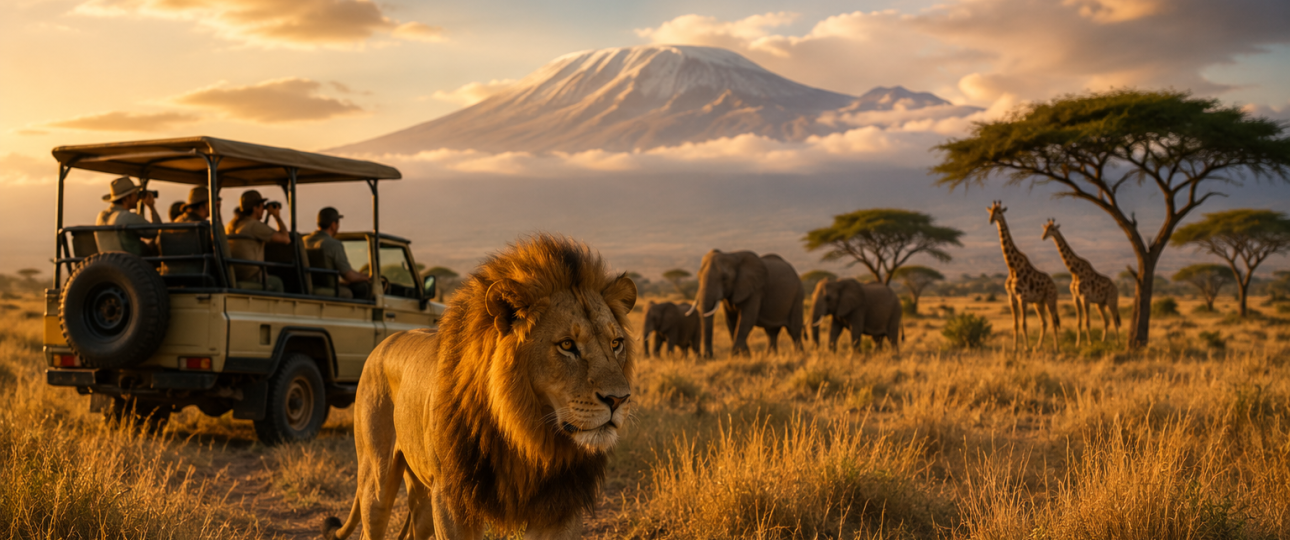
A Tanzania safari combines the Serengeti, Ngorongoro Crater, Tarangire, and Lake Manyara on the northern circuit, with Zanzibar as a beach extension. Costs range from roughly $250 per person per day for budget camping safaris to $1,500+ for luxury fly-in trips. The dry season (June–October) is best for general game viewing and river crossings; January–March is best for the wildebeest calving season. Most travelers need a visa, and a 7–10 day trip is the sweet spot for covering the highlights without rushing.
Key Facts Table
| Category | Detail |
|---|---|
| Best overall time | June–October (dry season, river crossings) |
| Best for calving season | Late January–February in Ndutu/Southern Serengeti |
| Typical trip length | 7–10 days for northern circuit + Zanzibar extension |
| Entry requirement | Most nationalities including the USA, UK, EU, Australia, and Canada must apply for a visa. |
| Visa cost | $50 for most tourists; $100 multiple-entry visa required for US citizens. |
| Currency used on safari | US dollars widely accepted; Tanzanian shillings for local spending |
| Main entry airports | Kilimanjaro International (JRO) for the northern circuit; Zanzibar (ZNZ) for the islands |
| Vaccination | Yellow fever certificate required if arriving from a risk-listed country; WHO classifies Tanzania itself as a yellow fever risk area |
| Serengeti park fee | Approximately $70–83 per adult per 24 hours, depending on season and source |
| Ngorongoro Conservation Area fee | Around $71–82 per adult, plus a separate crater descent fee |
| Budget safari cost | Roughly $250–400 per person per day |
| Mid-range safari cost | Roughly $400–800 per person per day |
| Luxury safari cost | Roughly $800–1,500+ per person per day |
| Big Five | Lion, leopard, elephant, buffalo, black rhino (rhino mainly in Ngorongoro Crater) |
| Great Migration | Present in Tanzania roughly nine months of the year |
Introduction
Tanzania is the birthplace of the classic African safari. It holds the Serengeti, the Ngorongoro Crater, and the largest share of the Great Migration’s route, alongside the white-sand beaches of Zanzibar just a short flight away. For a first-time visitor, though, the sheer number of parks, seasons, and price points can feel overwhelming.
This guide sets out the practical details: which parks to prioritize, when to travel depending on what you want to see, what a safari actually costs in 2026, and how to avoid the mistakes that quietly ruin an otherwise well-planned trip. Wherever a number or rule could change year to year — park fees, visa costs, migration timing — this guide reflects the most current figures available, cross-checked across several sources rather than a single quote.
Why Tanzania for a Safari
Tanzania offers something few destinations can match: a single country holding the Serengeti-Mara ecosystem, the Ngorongoro Crater’s dense wildlife concentration, and a genuine beach escape in Zanzibar, all reachable without crossing a border. Roughly a third of the country’s land is under some form of protection, spread across parks that range from world-famous to wonderfully uncrowded.
For photographers, the light and density of wildlife in the southern Serengeti during calving season is hard to beat. For families, Tarangire and Ngorongoro offer shorter drives between big-game encounters. For honeymooners, a lodge overlooking the Ngorongoro Crater followed by a private beach villa in Zanzibar is a well-worn and deservedly popular combination.
Best National Parks and Reserves
Serengeti National Park — The anchor of Tanzania’s northern circuit. Endless plains, the highest density of predators in Africa, and the stage for most of the Great Migration. Different sectors (southern, central/Seronera, western corridor, northern) shine at different times of year.
Ngorongoro Conservation Area — A collapsed volcanic caldera holding one of the densest concentrations of wildlife on the continent, including black rhino, making it one of the most reliable places to complete a Big Five sighting in a single day.
Tarangire National Park — Famous for its baobab trees and, during the dry season, some of the largest elephant herds in Tanzania as animals concentrate around the Tarangire River.
Lake Manyara National Park — Compact and scenic, known for tree-climbing lions and, in the wet season, spectacular flamingo flocks on the lake.
Nyerere National Park (formerly part of Selous Game Reserve) — A remote, less-visited southern circuit park offering boat safaris, walking safaris, and a genuine wilderness feel.
Ruaha National Park — Tanzania’s largest national park, known for large elephant and lion populations and very low visitor numbers.
Mikumi National Park — An accessible southern circuit park, often paired with Ruaha or visited as a shorter add-on from Dar es Salaam.
Arusha — Not a park itself, but the northern circuit’s main gateway town and a common overnight stop before or after safari.
Best Time to Visit (Month-by-Month)
The right time to visit depends entirely on what you want to see.
June–October (dry season, peak season): The classic safari window. Vegetation thins, animals gather at water sources, and this is the period for the dramatic Mara River crossings in northern Serengeti, occurring unpredictably based on rainfall patterns and herd movements, with July through October offering the most reliable wildlife viewing across northern Tanzania. Expect the highest prices and the biggest crowds at popular crossing points.
Late January–February (calving season): In the short-grass plains around Ndutu and the southern Serengeti, roughly 300,000 to 500,000 wildebeest calves are born within a few short weeks, drawing intense predator activity from lions, cheetahs, and hyenas. This is often considered a quieter, equally dramatic alternative to the river crossings, with fewer vehicles.
March–May (long rains, green/low season): The quietest and least expensive time to travel. Roads can be challenging and some camps in the far south and west close entirely, but rates drop significantly and landscapes are lush.
November (short rains, mini low season): A brief window between peak seasons offering a modest discount without the heaviest rain.
In short: June–October for classic dry-season game viewing and river crossings, late January–February for calving season, and March–May for the best value if you don’t mind occasional rain.
How Much Does a Tanzania Safari Cost
Safari pricing in Tanzania varies enormously depending on accommodation style, group size, and season. Based on current 2026 operator pricing:
| Tier | Per person, per day | 7-day trip estimate |
|---|---|---|
| Budget (camping/shared) | $250–400 | ~$1,750–2,800 |
| Mid-range (private vehicle, comfortable lodges) | $400–800 | ~$2,800–5,600 |
| Luxury (exclusive lodges, fly-in options) | $800–1,500+ | ~$5,600–10,500+ |
| Ultra-luxury | $1,500–3,000+ | ~$10,500–21,000+ |
These packages typically bundle accommodation, meals, a private vehicle and guide, and national park fees. International flights, visa costs, travel insurance, and tips are usually extra.
What drives the cost:
Park fees, which are set by the Tanzanian government and stay the same regardless of accommodation level — currently around $70 for Serengeti, $82 for the Ngorongoro Conservation Area, and $53 for Tarangire and Lake Manyara per adult per 24 hours. On a standard 7-day northern circuit itinerary, park fees alone typically add up to $500–600 per person.
Season — traveling during the March–May green season can lower accommodation rates by 30–40% compared with peak dry-season rates.
Private vs. group vehicle — a private vehicle and guide typically cost more but are worth it for flexibility and photography; sharing with a group brings costs down substantially.
Ngorongoro Crater descent — a separate vehicle fee (roughly $295 per descent) applies only if you go down into the crater itself, not just through the conservation area.
Visa, Entry Requirements, and Health
- Visa: Tourists from most countries, including the USA, UK, EU, Australia, and Canada, need a visa to enter Tanzania. Non-US tourists typically pay $50 USD for an ordinary e-visa or visa on arrival, while US citizens are required to obtain a $100 multiple-entry visa even for tourist travel. The e-visa is applied for through Tanzania’s official immigration portal in advance of travel and is generally the smoother option compared with arrival processing.
- Passport requirements: A passport with at least one blank page and six months’ validity is required.
- Yellow fever: Proof of yellow fever vaccination is required for all travelers arriving from countries where the disease is endemic, including layovers of 12+ hours. Tanzania itself is classified by the WHO as a yellow fever risk area, so many clinics recommend vaccination as good practice even for travelers arriving directly from a non-risk country.
- Money: US dollars are widely accepted at lodges and for park fees; Tanzanian shillings are useful for markets, tips, and local purchases. Carry newer-series USD notes, as older or damaged bills are frequently rejected.
- Malaria: Tanzania is a malaria-risk country. Speak with a travel health clinic about prophylaxis well before departure.
Zanzibar: The Perfect Safari Add-On
A short flight from Arusha or Dar es Salaam, Zanzibar pairs naturally with a safari a few days of dust and game drives followed by warm water and white sand. Stone Town offers a UNESCO-listed old town with spice markets and historic architecture. Along the coast, Nungwi and Kendwa are known for lively beach resorts, Paje and Jambiani for kitesurfing and a quieter pace, and Mnemba Island for premier snorkeling and diving. Most itineraries add 3–5 nights in Zanzibar at the end of a mainland safari.
Expert Tips for First-Time Safari Travelers
- Book 8–12 months ahead for mobile camps during calving season or peak crossing months the best-positioned camps sell out early.
- Choose 3 nights per area where possible rather than moving every night; fewer transfers mean more time actually watching wildlife.
- Pack neutral-colored clothing (khaki, olive, brown) and avoid bright colors or all-black/blue, which can attract tsetse flies in some areas.
- Bring a good pair of binoculars — shared vehicle binoculars are rarely enough for serious wildlife watching.
- Budget for tips — a common guideline is $15–25 per day for guides and camp staff.
- Confirm what’s included in your quoted price: park fees, drinks, laundry, and internal flights vary widely between operators.
- Build in flexibility if chasing river crossings — exact timing shifts by two to four weeks year to year, and no operator can guarantee the day it happens.
Frequently Asked Questions
How many days do I need for a Tanzania safari?
Seven days is generally the minimum to comfortably cover Tarangire, Ngorongoro, and the Serengeti without excessive driving. Ten to fourteen days allows for a more relaxed pace and a Zanzibar extension.
2. What is the best month to visit Tanzania?
It depends on your priority: June–October for the dry season and river crossings, late January–February for calving season, and March–May for lower prices with fewer crowds.
3. Do US citizens need a visa for Tanzania?
Yes. US citizens must obtain a $100 multiple-entry e-visa, even for standard tourist travel.
4. How much does a Tanzania safari cost per day?
Roughly $250–400 per person per day for budget camping safaris, $400–800 for mid-range lodges, and $800–1,500+ for luxury experiences.
5. Is Tanzania safe for tourists?
Millions of tourists visit Tanzania’s parks safely each year. As with any destination, standard precautions apply, and it’s worth checking your government’s current travel advisory before departure.
6. What is the Great Migration and when does it happen?
The Great Migration is the year-round movement of over a million wildebeest, plus zebra and gazelle, through the Serengeti-Mara ecosystem. River crossings peak from July to September (with August typically the busiest), while calving season runs from January to February.
7. Can I see the Big Five in Tanzania?
Yes. Lion, leopard, elephant, and buffalo are commonly seen across the northern circuit; black rhino sightings are most reliable in the Ngorongoro Crater.\
Final Summary
A Tanzania safari rewards planning. The right combination of parks, season, and pace makes the difference between a rushed checklist trip and one that actually delivers on the country’s reputation. For most first-time visitors, a 7–10 day northern circuit itinerary — Tarangire, Ngorongoro, and the Serengeti — paired with a few nights in Zanzibar, offers the best balance of wildlife, comfort, and value.
Ready to build your own Tanzania itinerary? Plan Your Safari with Lekobe Adventures, or Request a Custom Itinerary tailored to your travel dates, budget, and priorities — whether that's the calving season in Ndutu, the river crossings in the north, or a relaxed lodge-and-beach combination ending in Zanzibar. Talk to a Safari Expert at info@lekobeadventures.com or +255 676 68 1293.